AI in schools is an adaptive problem, not a technical one. Leaders make progress through structured listening, trusted partners and local learning, not top-down mandates or shaky research claims.
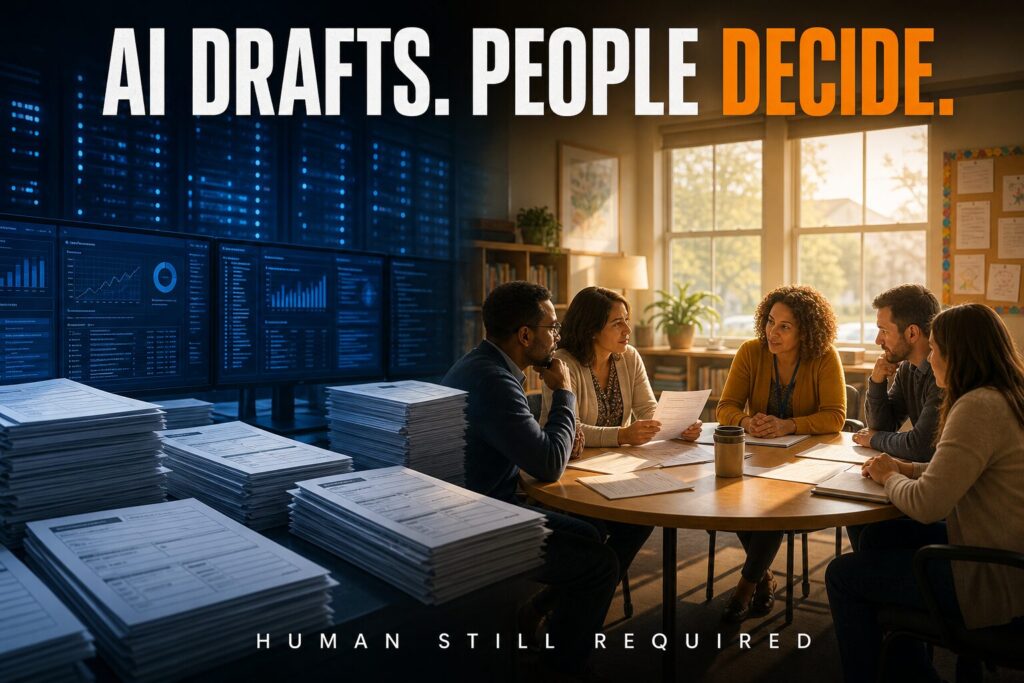
AI for IEPs can save special educators hours per student, but the decisions, the data choices and the trust with families must stay human. Leaders decide where the saved time goes.
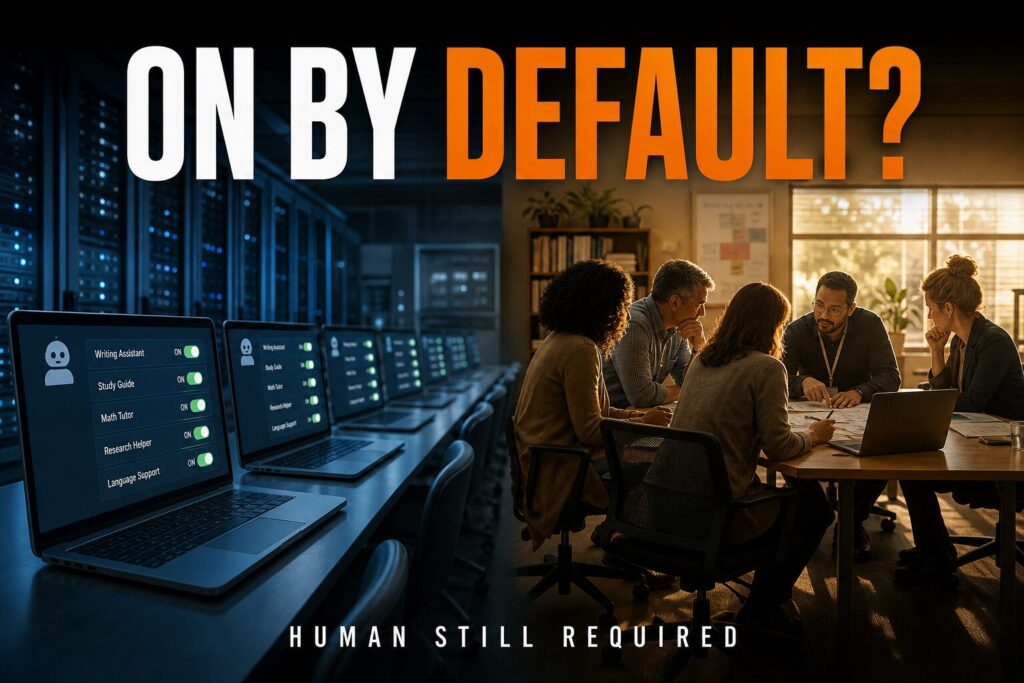
AI features arriving switched on in school tools is a vendor choice, but keeping them is a leadership choice. Audit what’s on, decide on purpose, and redesign work AI finishes easily.
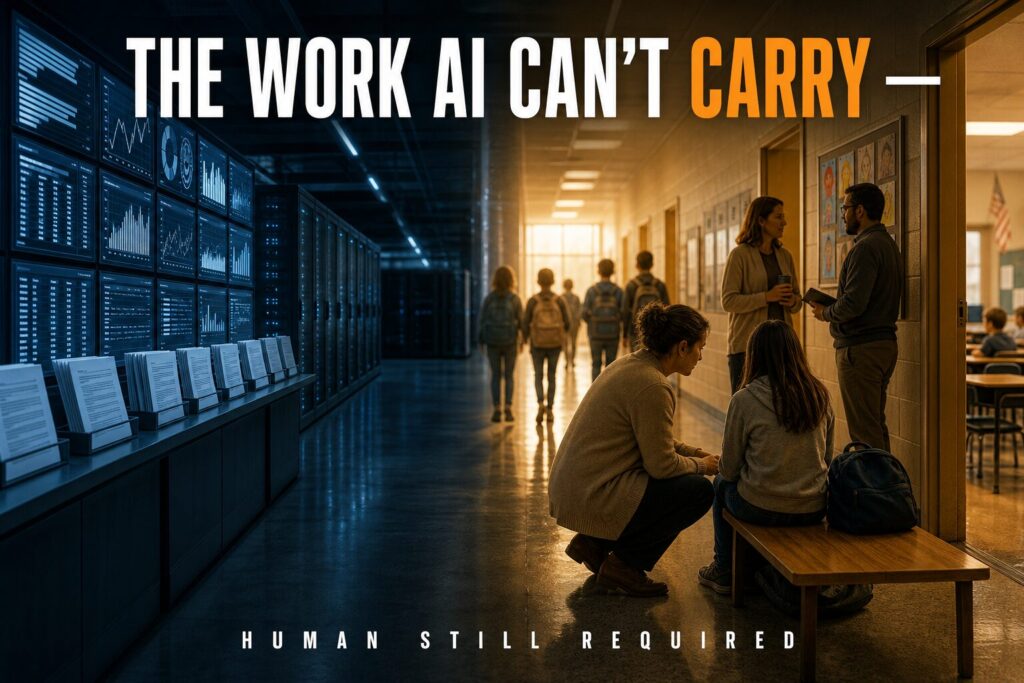
Teachers spend about eight hours a week supporting student well-being, and it is getting harder. AI can clear the paper around that work, but leaders must make sure teachers don’t carry it alone.
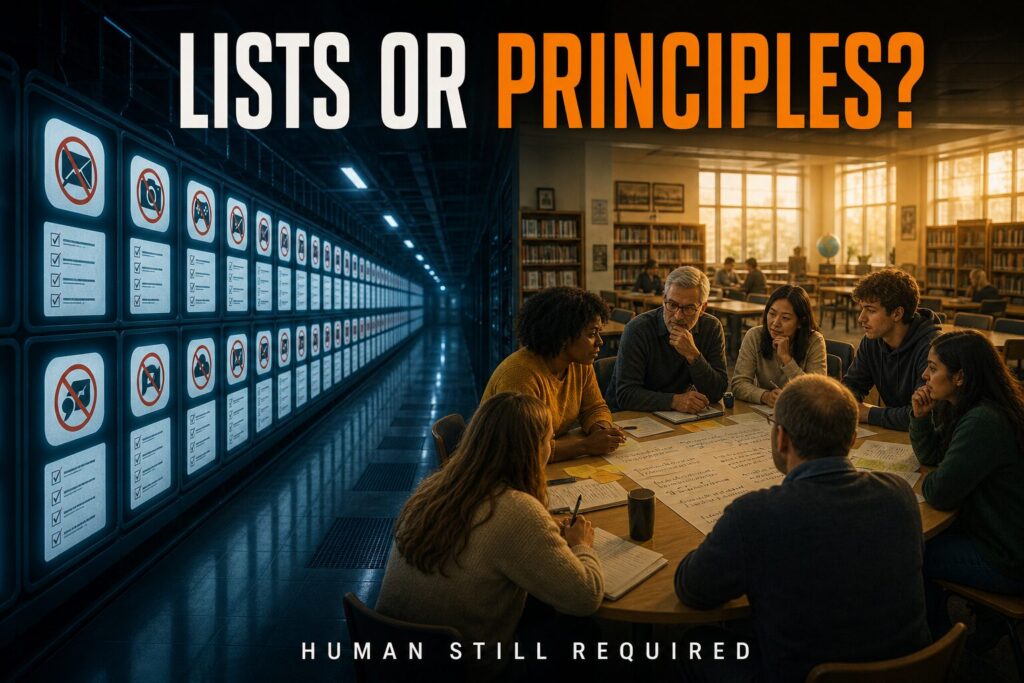
A banned-tools list tells people what to avoid. School AI guidance built on a few clear principles tells teachers and students how to decide, even about tools no one has reviewed yet.
The ed-tech backlash has reached the campaign trail. School leaders should answer it with tool-by-tool judgment about purpose, cost and evidence, not blanket bans or blind defense.
A school AI ban or a return to paper tests can buy time, but neither redesigns the work. Leaders should define the thinking students must do themselves and make it visible.
Whether schools ban AI or build it into tests, the strongest evidence of learning is the same: a student who can explain, defend and revise their own thinking.
The most durable AI school policy names the decisions only humans make, like grades, discipline and placement, instead of chasing a list of tools that changes every semester.
A new review found ChatGPT’s Teen Mode didn’t work as promised. Student AI safety can’t be outsourced to a setting; leaders must name what they protect and start the conversations.