More than half of New York districts lack a board-adopted AI policy. But no policy is still a policy. Leaders need shared thinking staff can use, not just a document.
Students mostly support in-class phone limits but oppose all-day bans. How leaders make this cellphone ban policy decision, by listening first, sets the pattern for AI policy next.
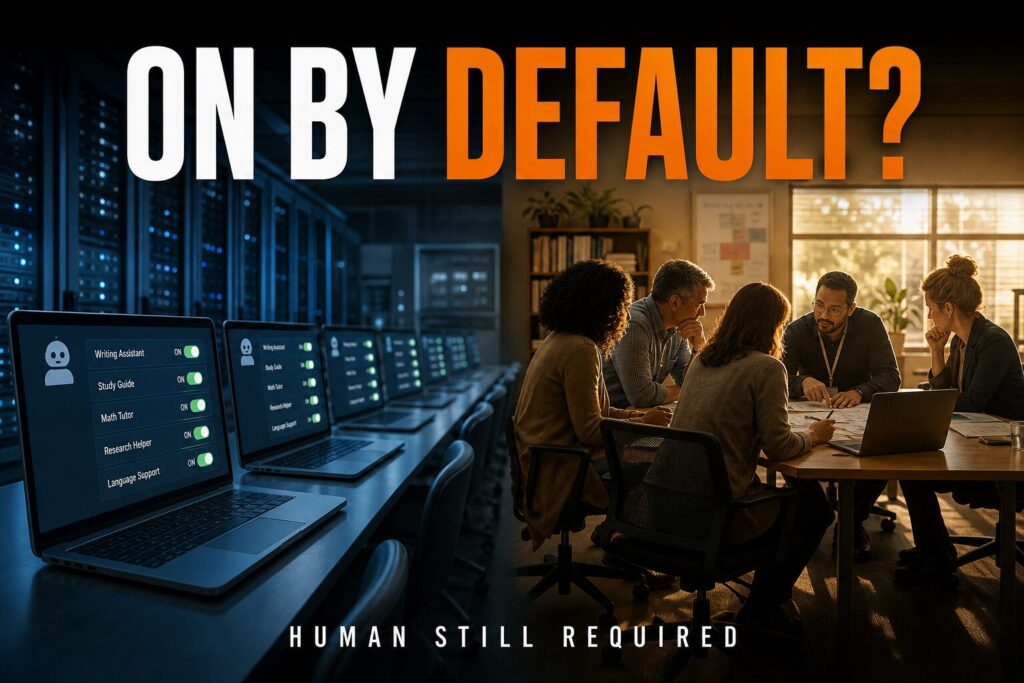
AI features arriving switched on in school tools is a vendor choice, but keeping them is a leadership choice. Audit what’s on, decide on purpose, and redesign work AI finishes easily.
A banned-tools list tells people what to avoid. School AI guidance built on a few clear principles tells teachers and students how to decide, even about tools no one has reviewed yet.
A school AI ban or a return to paper tests can buy time, but neither redesigns the work. Leaders should define the thinking students must do themselves and make it visible.
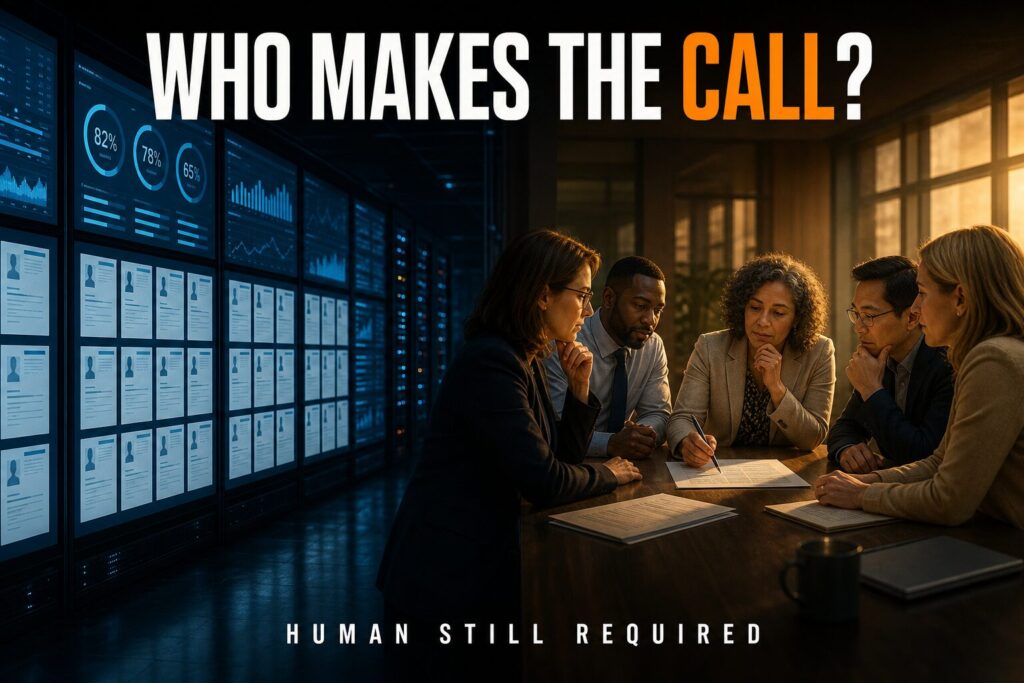
The most durable AI school policy names the decisions only humans make, like grades, discipline and placement, instead of chasing a list of tools that changes every semester.
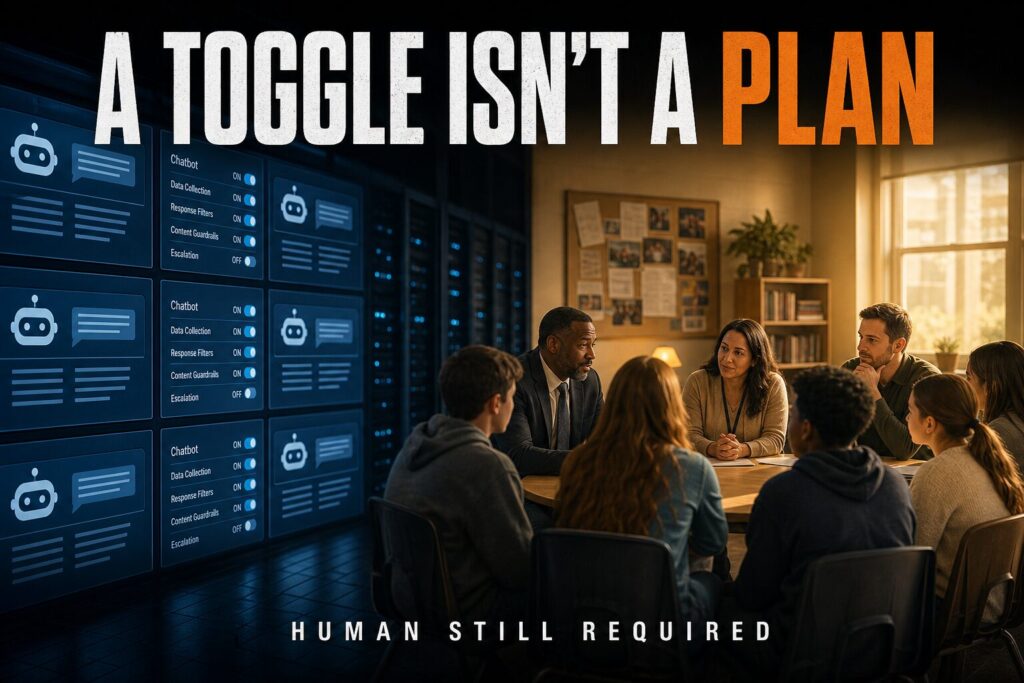
A new review found ChatGPT’s Teen Mode didn’t work as promised. Student AI safety can’t be outsourced to a setting; leaders must name what they protect and start the conversations.
The College Board’s AP redesign builds AI into learning but keeps scored writing AI-free. The lesson for leaders: put AI guardrails where you need evidence of student thinking.
How an AI tool enters your schools matters as much as the tool. A Texas investigation and a voluntary Nevada pilot show why transparent, local, teacher-informed decisions build trust.
Many school AI pilots run without a clear definition of success. Leaders should name the problem, decide what evidence of learning counts, and set a decision date before the next renewal.