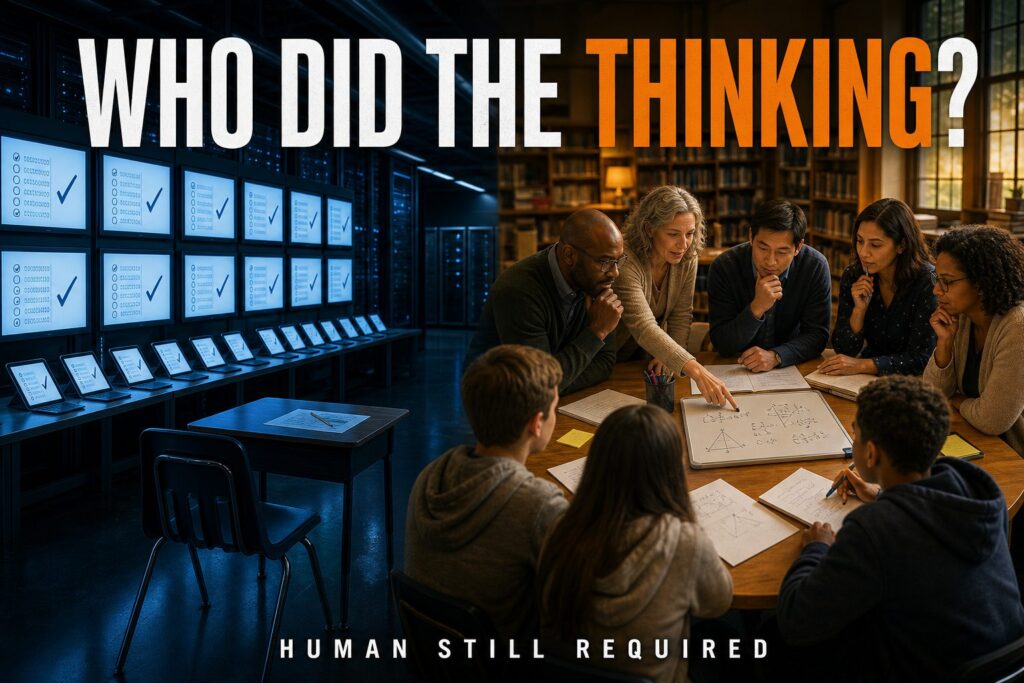
Student AI policy works best when it sets an order: students think first, then AI supports practice and feedback, with educators deciding when a student is ready for more.
Student AI use is rising, and most high schoolers learn it on their own. Leaders need a plan to teach the thinking, so students build skill, not just better finished products.
A banned-tools list tells people what to avoid. School AI guidance built on a few clear principles tells teachers and students how to decide, even about tools no one has reviewed yet.
Students can operate chatbots but often can’t judge them. AI literacy is critical thinking, and teachers need ongoing, school-based learning to teach it well.
The College Board’s AP redesign builds AI into learning but keeps scored writing AI-free. The lesson for leaders: put AI guardrails where you need evidence of student thinking.
New research shows students take AI shortcuts and skip AI tutors that ask questions. The fix isn’t a better tool; it’s school work that makes the thinking worth doing.