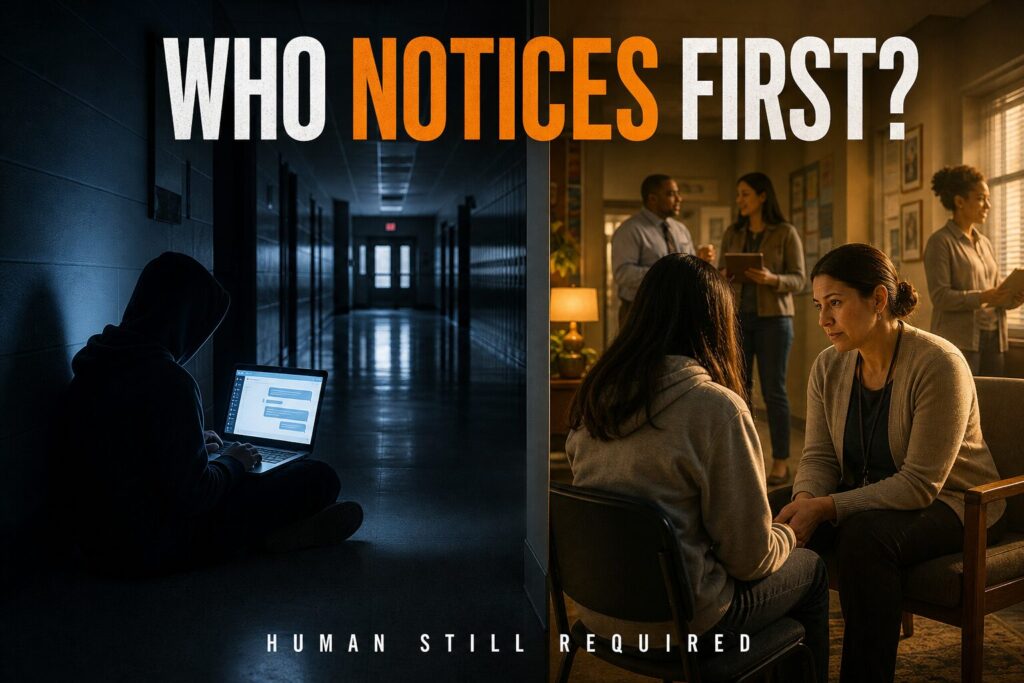
A new JED Foundation survey found 57% of students use AI when sad, stressed or lonely. The leadership response isn’t panic or bans. It’s protecting presence and making sure every student has a trusted adult.
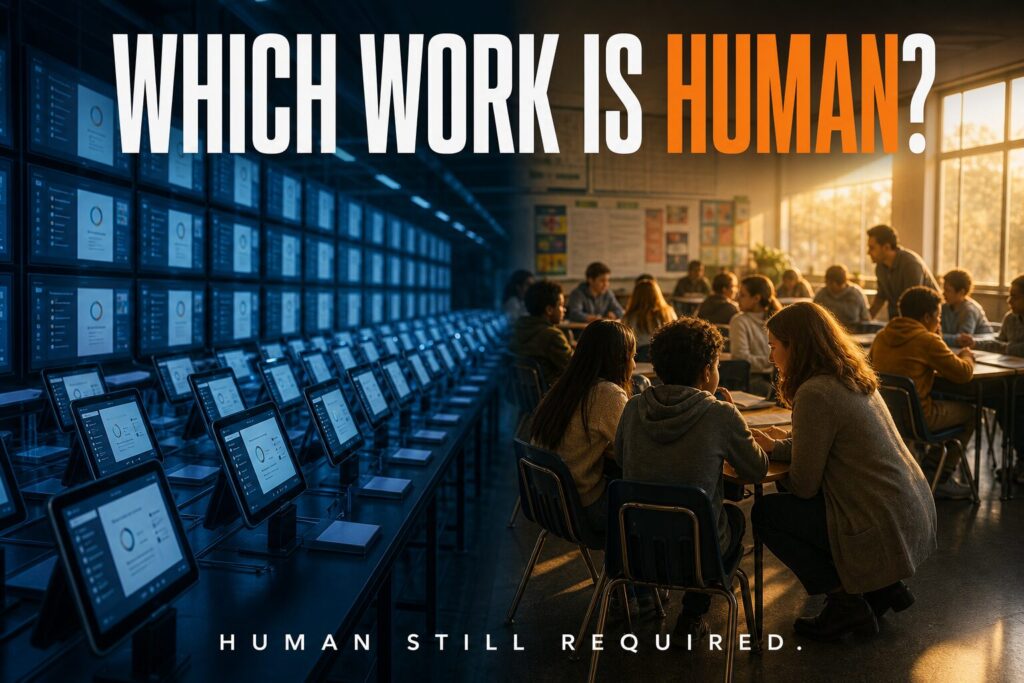
The AI replacing teachers debate misses the real choice. Leaders must decide which school work goes to AI, like bus routing, and which relational work stays human.
A new Gallup survey says AI is freeing up time for many teachers. Whether that time reaches students depends on leaders naming what it’s for and protecting it.
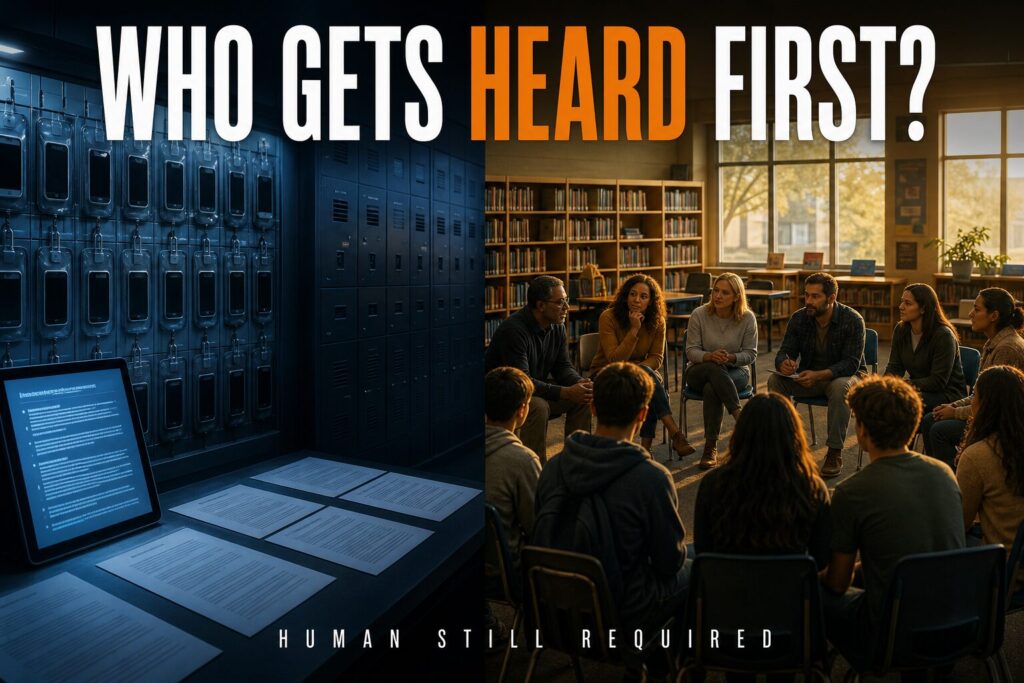
Students mostly support in-class phone limits but oppose all-day bans. How leaders make this cellphone ban policy decision, by listening first, sets the pattern for AI policy next.
AI in schools is an adaptive problem, not a technical one. Leaders make progress through structured listening, trusted partners and local learning, not top-down mandates or shaky research claims.
Teachers spend about eight hours a week supporting student well-being, and it is getting harder. AI can clear the paper around that work, but leaders must make sure teachers don’t carry it alone.
Teens are turning to AI companions for advice and support. A chatbot can listen, but it can’t know a student or receive what they give. Mattering is human work, and leaders can protect it.
New research shows AI cheating suspicions are eroding trust between students and teachers. Leaders can respond by asking before assuming, making thinking visible, and writing AI policy with students and teachers.
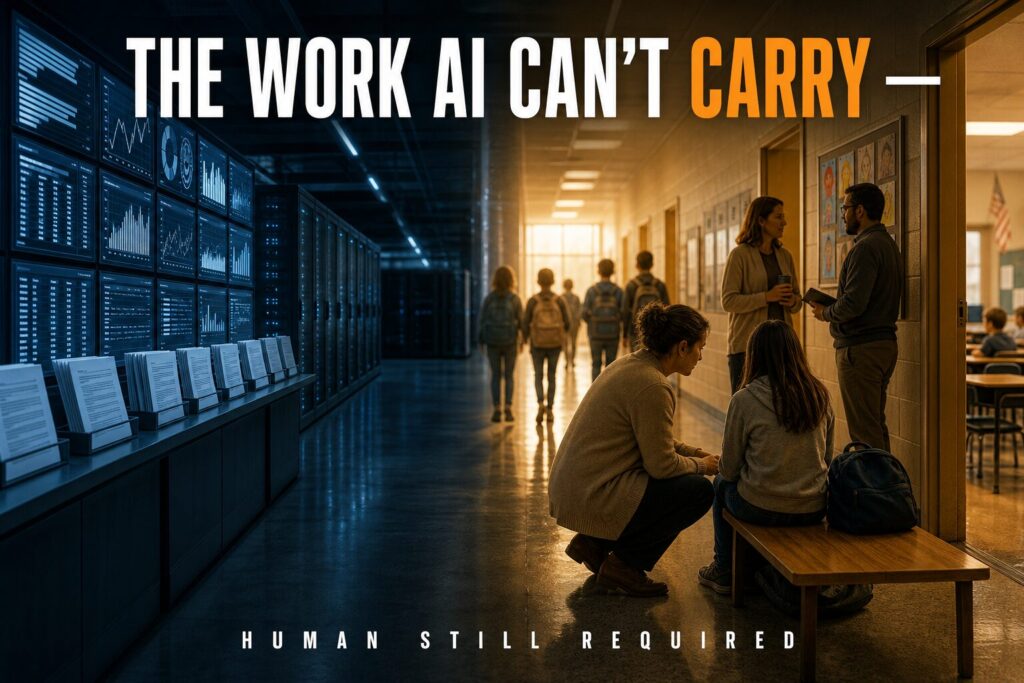
AI can scale explanations, but not the accountability and push that come from a relationship with a teacher. Leaders should decide on purpose which human work their schools protect.