AI teacher preparation is uneven, with most programs leaving it to individual instructors. School leaders must build AI judgment through hiring, induction and coaching.
New research shows AI helps learning when it supports thinking, not when it replaces it. AI professional development should teach that judgment, not just tool features, and include the skeptics.
Most educators haven’t been trained to respond to AI deepfakes, and laws mostly target individuals. A school deepfake policy works only when every adult knows what to do first.
Parents want schools to teach AI and guard it carefully. With many teachers still untrained, leaders need to listen, explain their reasoning and build real capacity.
More than half of New York districts lack a board-adopted AI policy. But no policy is still a policy. Leaders need shared thinking staff can use, not just a document.
Teachers are using AI faster than systems are building shared understanding. AI professional learning has to start with leaders, name decision owners and become an ongoing system, not a one-time session.
Teachers are redesigning assessment for AI one classroom at a time. Leaders should turn those solo fixes into a shared definition of what counts as evidence of student thinking.
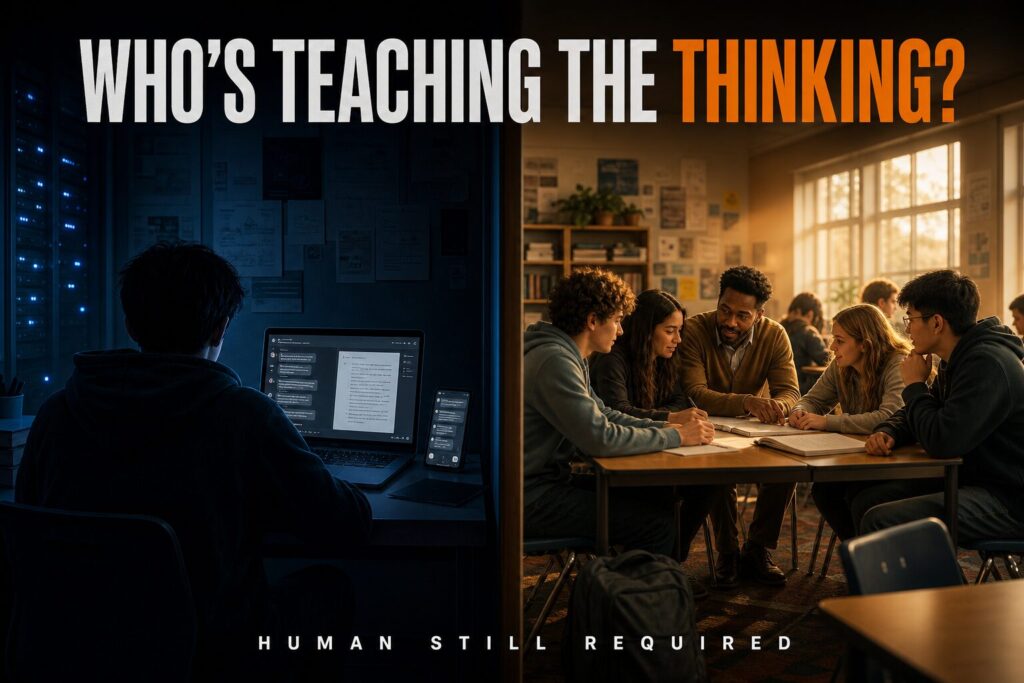
Student AI use is rising, and most high schoolers learn it on their own. Leaders need a plan to teach the thinking, so students build skill, not just better finished products.
Students can operate chatbots but often can’t judge them. AI literacy is critical thinking, and teachers need ongoing, school-based learning to teach it well.
New survey data shows AI professional development and clear policies build teacher confidence but don’t ease fear or low morale. Leaders must also address identity, loss and teacher voice directly.