New survey data shows AI professional development and clear policies build teacher confidence but don’t ease fear or low morale. Leaders must also address identity, loss and teacher voice directly.
Parents are starting to see grade inflation, and AI makes grades even harder to read. Leaders should base grades on thinking students can explain, defend and transfer, and be honest with families about what a grade means.
How an AI tool enters your schools matters as much as the tool. A Texas investigation and a voluntary Nevada pilot show why transparent, local, teacher-informed decisions build trust.
AI is being added to K-12 curriculum faster than evidence shows it helps. Adoption is no longer a one-time decision. Leaders must decide what gets automated and keep teachers in the loop.
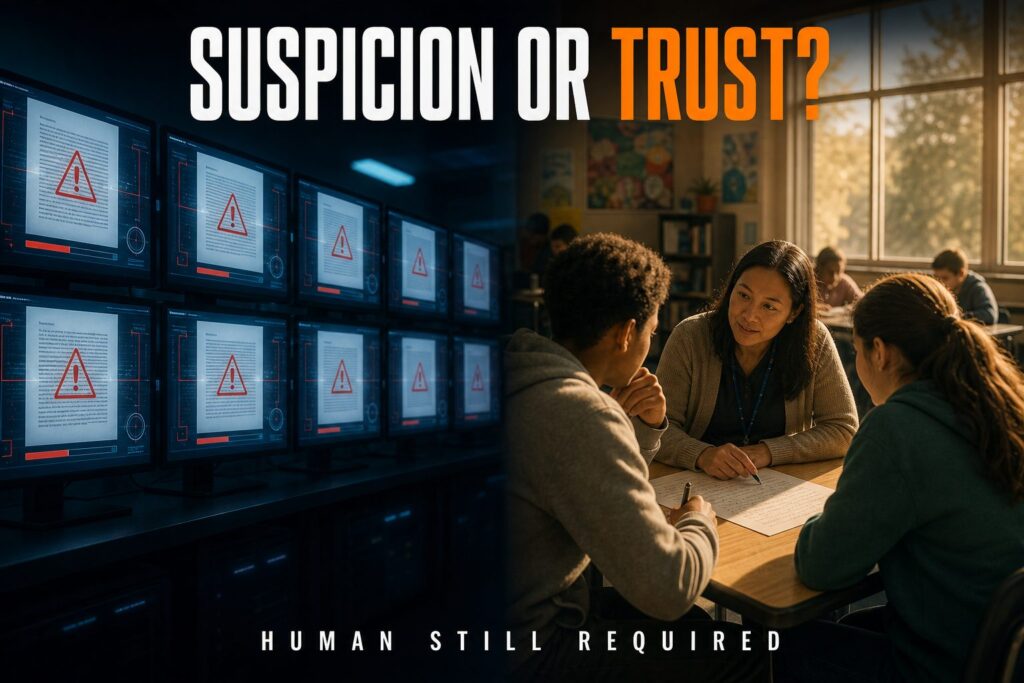
New research shows AI cheating suspicions are eroding trust between students and teachers. Leaders can respond by asking before assuming, making thinking visible, and writing AI policy with students and teachers.
Many school AI pilots run without a clear definition of success. Leaders should name the problem, decide what evidence of learning counts, and set a decision date before the next renewal.
When AI rules depend on which teacher a student has, the fix isn’t a longer policy. It’s professional learning that builds shared thinking behind every classroom decision.
AI can scale explanations, but not the accountability and push that come from a relationship with a teacher. Leaders should decide on purpose which human work their schools protect.
Students with a trusted adult at school are more likely to take advanced courses, yet trusted adults rarely make the recommendation. Leaders should route data to the people students trust.
AI for school leaders pays off when it protects attention for people. Translated family messages show why anything high-stakes still needs a human read before it goes home.