Two new reports this week landed on the same message from families. A new parent AI survey says most parents want schools to teach AI, and want strong guardrails around it. They are not asking schools to ignore it. They are not asking schools to rush it either.
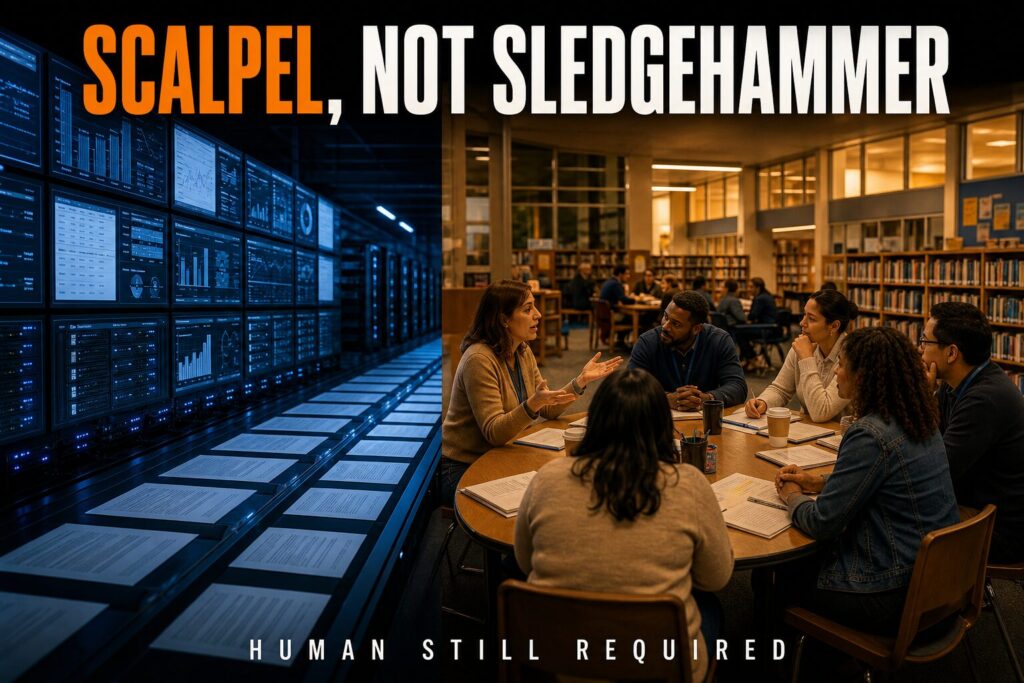
One parent leader put it in a line every superintendent should hear. Regulating AI in schools, she said, takes a scalpel, not a sledgehammer.
That’s a leadership request. And right now, a lot of systems aren’t ready to answer it.
Key takeaways
- A National Parents Union poll found 77% of K-12 public school parents want schools to teach students how to use AI tools effectively, and 85% support teaching AI safety.
- The same parents want guardrails: 81% want schools barred from buying technology not proven safe and effective for learning.
- Educators aren’t ready to meet that expectation. In one survey, 43% of teachers said they had received no AI training at all.
- Families are asking for clarity, not just rules. Leaders who listen, explain their reasoning and train their staff will earn trust; leaders who stay silent will lose it.
What’s happening
On November 3, EdSurge reporter April Rubin covered a National Parents Union poll on what parents want from schools on AI. The group surveyed 1,528 parents of K-12 public school students in September. The headline: 77% want schools to teach students ways to use AI tools effectively, and 85% support teaching students about AI safety.
But this isn’t a blank check. The same poll found 81% of parents want public schools prohibited from buying technology that isn’t proven to be safe and effective for learning. Seventy-nine percent want all teachers trained in digital and AI literacy and responsible technology use. Seventy-one percent support banning students from using AI chatbots throughout the school day. And only 46% think their state is handling technology use in schools well enough.
Keri Rodrigues, co-founder of the National Parents Union, described it as something that “requires a scalpel, not a sledgehammer” when it comes to regulation. One Massachusetts mother quoted in the piece said she isn’t opposed to AI at all. Her worry is students relying on it without learning the material.
The same EdSurge article pointed to the other side of the gap. In Educators for Excellence’s 2026 “Voices from the Classroom” survey, fewer than a quarter of teachers said they’d received adequate training to support students in using AI tools well. Forty-three percent said they’d received no training at all. As E4E co-founder and CEO Evan Stone put it, “It’s like a brave new world that most teachers are exploring on their own.”
Two days later, on November 5, EdTech Magazine reported on a Hanover Research survey of nearly 300 K-12 parents and staff. More than half of respondents said students use AI in their schoolwork. Nearly 7 in 10 staff use AI sometimes or often in their own work. But most respondents said students have been told when to use AI, not always how. Half of staff said they lack time to train students. Nearly 7 in 10 staff want more training and support, and only 37% feel very comfortable showing students how to use AI for schoolwork. Just over half of parents and staff believe adequate safeguards protect sensitive data.
Hanover’s Marriam Ewaida summed it up: leaders cannot afford to make decisions based on assumptions alone.
What the parent AI survey reveals for leaders
Read these numbers together and a picture comes into focus. Parents want two things at once. Teach it. And protect my child. That can sound like a contradiction. It isn’t. It’s exactly what we ask of schools with almost everything else that matters.
What parents are describing is judgment. Not a ban. Not a free-for-all. A school that knows what it’s doing and can explain why.
In Chapter 3 of Human Still Required, I write about the pull toward control when the ground shifts. Bans and blanket restrictions feel responsible. They’re easy to announce. But they don’t build understanding, and they don’t build judgment in students or staff.
Control feels safe—but it isn’t the same as leadership.
Human Still Required
A sledgehammer is a control move. A scalpel requires skill. It requires people who know the work well enough to make precise decisions. That’s why the training numbers matter so much. You can’t ask a system to make careful, specific choices about AI when 43% of its teachers say they’ve had no training at all.
This is where Chapter 11, “Staff, Students, and the Fear Question,” comes in. Parents aren’t anti-technology. Many of them are worried. Worried their child will lean on a tool instead of learning. Worried about data. Worried their school doesn’t have a plan. When a school says nothing, that worry doesn’t go away. It grows. In that chapter I argue that avoidance doesn’t create clarity. It erodes trust.
Fear isn’t asking leaders to stop progress. It’s asking for clarity, consistency, and care.
Human Still Required
That line was written about staff and students. It fits families just as well. The poll shows only 46% of parents think their state is handling this well enough. That’s not a vote against AI. It’s a request for clarity.
And the Hanover finding — students told when but not how — is a clear signal. A rule about when is a policy. Teaching how is learning. Families are asking for the second one, and that only happens when the adults in the building have had time to learn it themselves.
Chapter 8 adds the last piece. Trust doesn’t come from a well-written policy alone. It comes from people believing their leaders heard them.
Listening is the decision-making process.
Human Still Required
Polls like this one are a form of listening at a national scale. But your families aren’t a national sample. They are your families. The work is to find out what they think, tell them what you’ve decided, and show them how you got there.
What leaders can do now
- Ask your own families. Run a short survey or hold listening sessions this semester. Ask what parents hope AI does for their child and what they’re worried about. Don’t make decisions on national assumptions about local people.
- Publish the reasoning, not just the rules. Tell families when students may use AI, when they may not, and why. A one-page explanation in plain language does more for trust than a long policy no one reads.
- Close the training gap before you expand student use. If teachers haven’t been trained, they can’t teach students how to use AI well. Build ongoing, job-embedded professional learning, not a single session, and give teachers time to practice.
- Be honest about what you don’t know yet. Families can handle “we’re still learning.” What erodes trust is silence or false certainty. Share what you’re piloting, what you’re watching, and when you’ll report back.
- Hold a clear line on what you buy. Parents want proof that tools are safe and effective for learning. Make your review process visible: who evaluates tools, what evidence you ask for, and how student data is protected.
Frequently asked questions
What do parents want from schools on AI?
According to a National Parents Union poll reported by EdSurge on November 3, 2026, most parents want schools to teach students how to use AI effectively and safely. They also want guardrails, including teacher training and limits on buying technology that isn’t proven safe and effective for learning.
Are teachers trained to teach students about AI?
Many are not. Educators for Excellence’s 2026 survey found 43% of teachers had received no AI training, and fewer than a quarter felt adequately trained to support students. A Hanover Research survey found only 37% of staff feel very comfortable showing students how to use AI for schoolwork.
How should school leaders communicate with parents about AI?
Start by listening, then explain your decisions and the reasoning behind them in plain language. Be clear about when students may use AI and why, be honest about what you’re still learning, and share how you protect student data and evaluate tools.
A plan families can trust
Parents aren’t asking schools to pick a side in the AI debate. They’re asking schools to be thoughtful. To teach what matters, protect what matters, and explain the difference.
That’s not a technology project. It’s leadership work. If your leadership team wants to work through these questions together, the 5-Week Book Study is built for exactly that kind of conversation.
So here’s the question to sit with this week: if a parent asked you tomorrow how your school decides when and how students use AI, could you explain it in two minutes?
Sources
- Survey: Most Parents Want Students to Use AI in School — With Strong Safeguards, EdSurge, November 3, 2026
- National AI Research Report Covers How Tools Are Used in Classrooms, EdTech Magazine, November 5, 2026